

In Germany, municipalities have been required since 1 January 2024 to draw up a municipal heat plan for existing buildings: by 30 June 2026 for cities of more than 100,000 inhabitants and by 30 June 2028 for towns of 10,000 to 100,000. In a technical article, IMI looks at what this means for operators of existing district heating networks.
The problem: hydronic imbalance
In many networks, buildings and substations do not reach the design return temperature or the design supply–return temperature difference. With a small temperature difference, much more flow is needed to deliver the same energy. The network becomes less efficient and its spare capacity cannot be used in practice.
Sending more heat does not solve it: it raises energy use and losses and increases costs for end users. Nor do penalty charges for high return temperatures address the cause.
The solution: a smart valve at the connection point
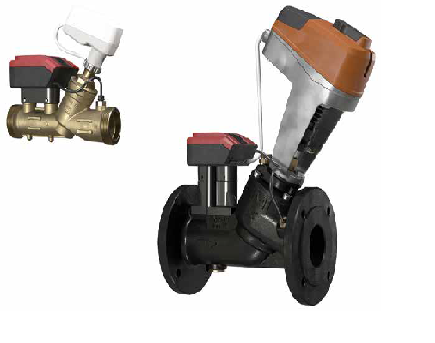
IMI recommends smart control valves at the substation between the network and the building, with TA-Smart as the example. The valve:
- controls flow independently of pressure fluctuations in the network,
- measures flow and temperatures with integrated sensors,
- limits flow to the contracted value and actively limits the return temperature,
- logs the energy delivered, in kWh, every minute, and sends the data to the operator's control centre.
The benefits: better use of network capacity, no costly network reinforcement, traceable heat delivery, fewer disputes with building owners and data for future planning. IMI points out that the building side must be balanced as well for the full benefit.
For TA-Smart applications in substations or central plant rooms, contact our engineers.